GEORGE MASON UNIVERSITY STUDENTS TURN PERSONAL EXPERIENCE INTO ACCESSIBILITY INNOVATION
For Owais Yousuf, inspiration came from family.
Growing up, he watched his father get around airports using crutches after contracting polio as a child. His teammates had similar experiences with relatives who struggled with mobility. The four George Mason University engineering students began wondering:
How do you make airport travel more independent and less stressful for people with mobility challenges?
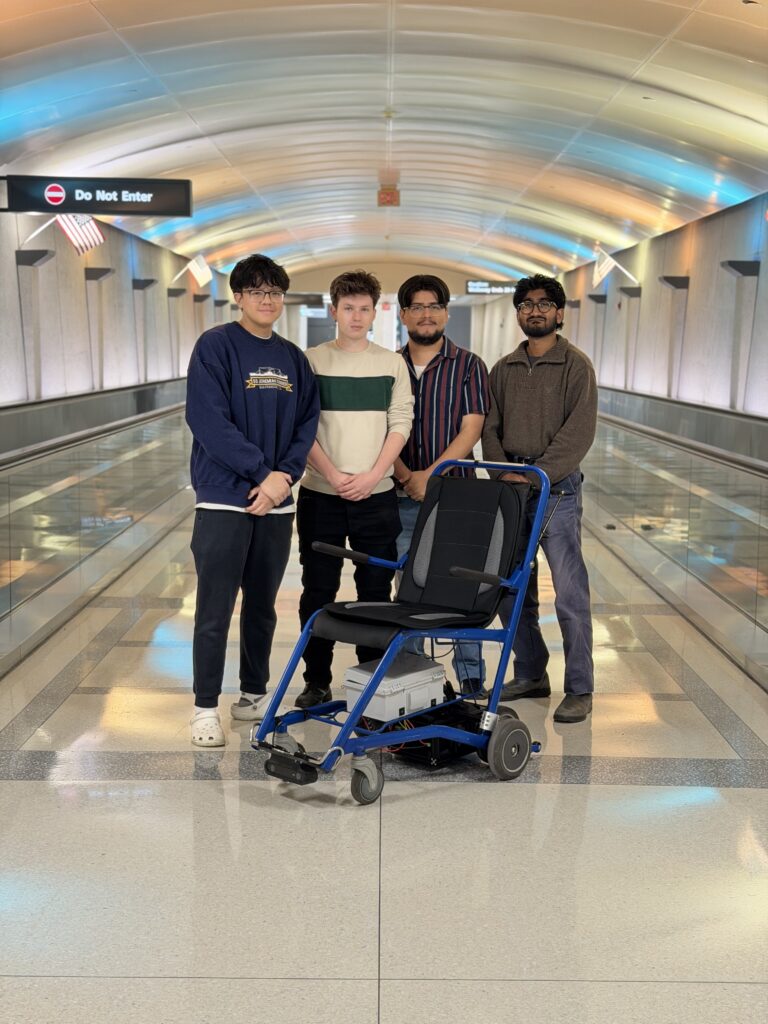
The answer to that question became B-Drive, a senior capstone project developed by Yousuf, Turner Applegate, Javier Carpio Jota, and Calvin Nguyen that combines autonomous navigation, computer vision, and adaptive mobility technology to help wheelchair users move through transportation hubs on their own terms. B-Drive was one of several George Mason capstone projects supported through a GO Virginia-funded initiative led by the Nexus234 Innovation District, which pairs students with industry mentors and opportunities to address pressing needs.
“The people we love aren’t just statistics,” said Yousuf, the team’s lead. “They’re people we care about. We’ve seen the frustrations they face firsthand. That experience gave us the context to build something that could provide them some relief.”
As the team dug deeper, they found that navigating a large airport can present obstacles at nearly every step. Long walks, unfamiliar layouts, limited assistance, and confusing signs can make traveling on their own difficult for many passengers.
To better understand those barriers, the team participated in the National Science Foundation’s I-Corps program, speaking directly with travelers, transportation professionals, accessibility advocates, and industry experts.
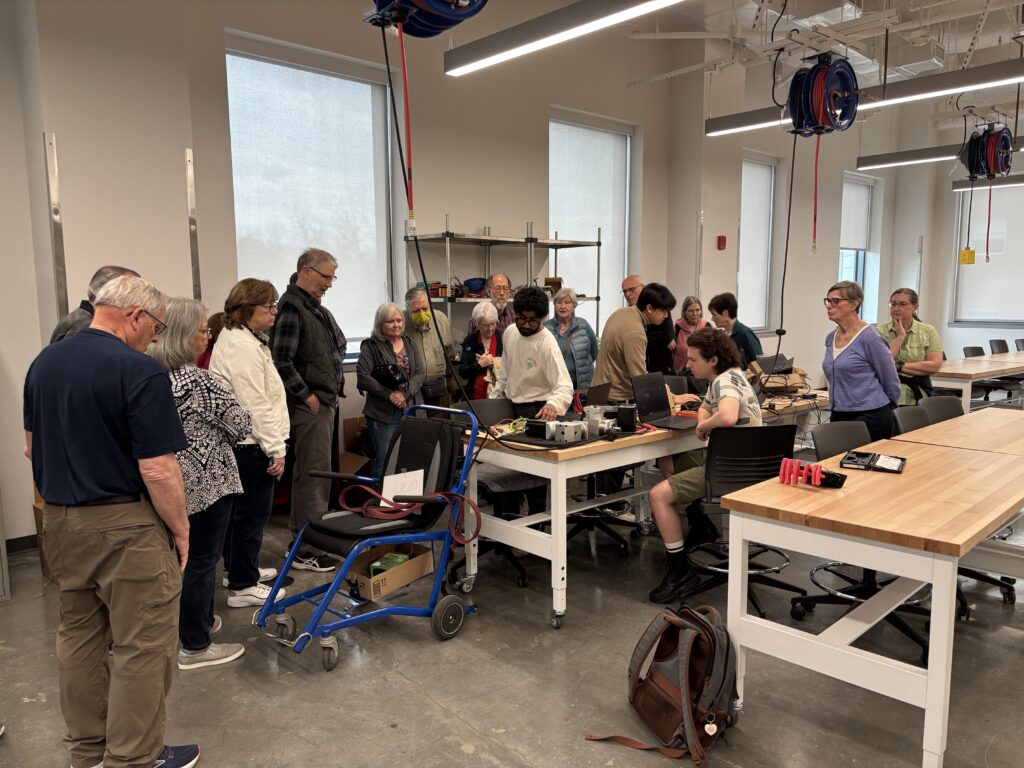
“We consistently heard that people wanted the freedom to move through an airport with greater dignity and confidence,” said Yousuf.
Those conversations led to B-Drive. The team decided early on that B-Drive needed to fit into existing airport operations, so they designed it to work with wheelchairs already found in many airports.
Bringing B-Drive to life required more than technical expertise. After delays in obtaining testing equipment, the team drove to New Jersey to buy a wheelchair themselves rather than wait.
Their persistence impressed Robert “Bob” Schneider, executive director of OmniRide and the team’s industry mentor, who was introduced to the students through Nexus234’s initiative.
“They didn’t let anything stop them. They went out and got it done,” said Schneider.
Schneider guided the students as they narrowed the project’s scope and found a realistic way to put their ideas into action. He suggested the team pick one clear, manageable use case. They decided to focus on a journey that’s familiar to many travelers at Washington Dulles International Airport: getting from the Silver Line Metro station to their destination inside the airport.
As the project progressed, the students began thinking beyond the classroom. The team is currently exploring intellectual property protection and potential avenues for commercialization through George Mason’s Office of Technology Transfer.
Leigh McCue, professor and chair of George Mason’s Department of Mechanical Engineering, believes that moving from classroom projects to real-world applications is among the most valuable lessons for students.
“One of the hardest parts of engineering is defining the right problem to solve,” said McCue. “This team resisted the temptation to build technology for its own sake and grounded their approach in the experiences of the people they aimed to empower.”
The project also prompted Yousuf to rethink what it means to be an engineer.
“Engineering is ultimately about people,” said Yousuf. “Technology is only valuable if it improves someone’s life. That’s what motivated us from the beginning, and it’s what continues to motivate us now.”
Graduation marked the end of the capstone project, but the team hopes B-Drive’s story is only beginning.
The goal remains the same for Yousuf as when the project first started on a whiteboard.
“We’re not going to stop until we bring a smile to people’s faces,” said Yousuf. “That’s what this has always been about.”